

Ndhlovu Nkosikhona
February 13, 2026
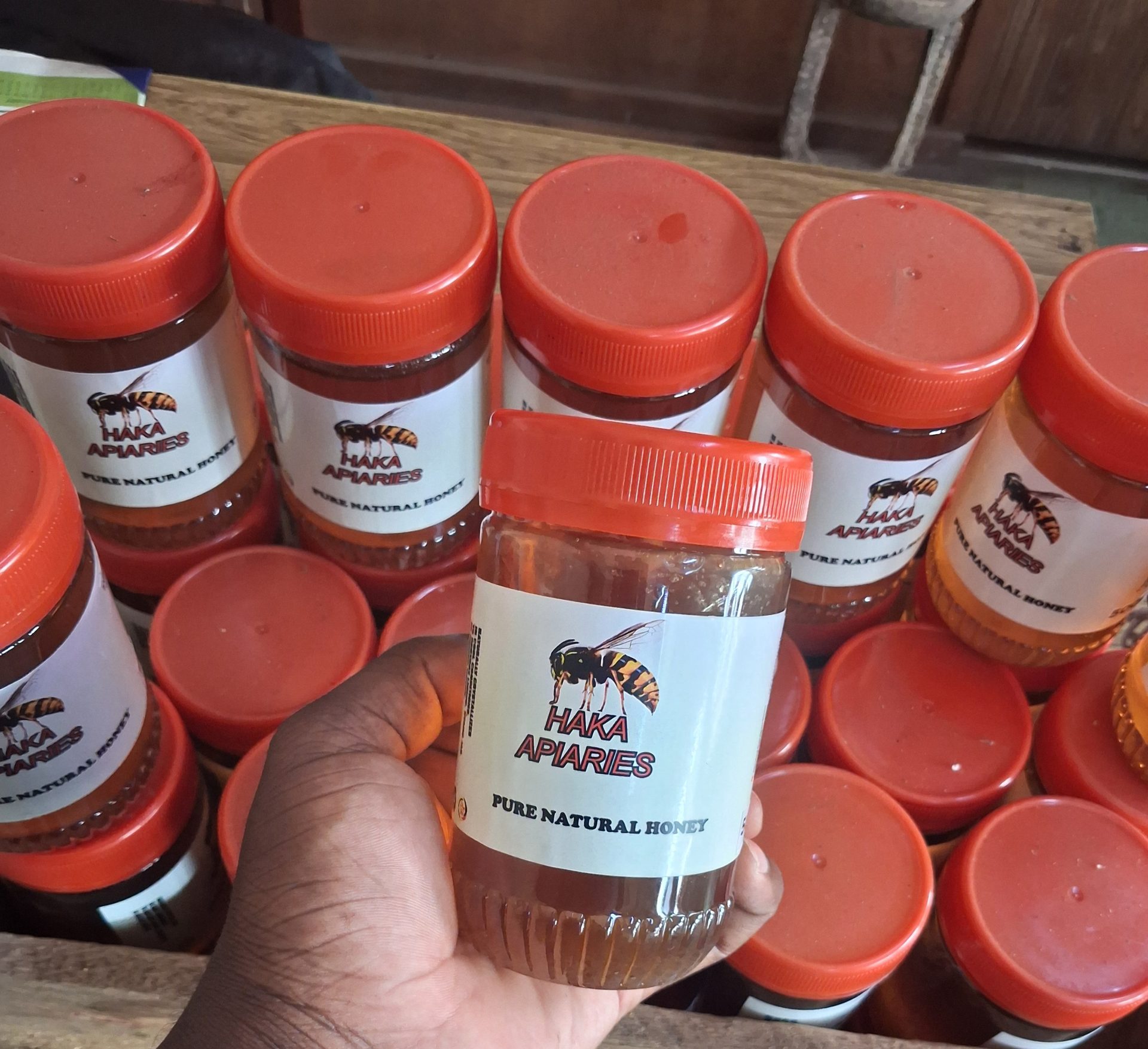
There is a quiet hum emanating from the acacia woodlands of Haka Game Park. It is not the sound of city traffic, nor the distant murmur of industry. It is the collective wingbeat of thousands of Apis mellifera scutellata-the hardy African honeybee, working nectar-rich blossoms along the edge of a protected Ramsar wetland.
What they produce is liquid gold. But Haka Honey is more than just a jar of pure, raw sweetness. It is a conservation currency. A tangible product of ecological restoration. And perhaps the most meaningful souvenir you can take home from Harare’s only urban sanctuary.
This is the story of how bees are helping us save a wetland, one harvest at a time.
GIS in Wildlife Enthusiast
For decades, the relationship between protected areas and revenue generation has been fraught with tension. How does a sanctuary fund its own protection without compromising the very values it seeks to preserve?
At Haka Game Park, we found an unexpected answer inside a wooden box.
Apiculture, the ancient practice of keeping honeybee colonies in hives-requires surprisingly little: flowering plants, a reliable water source, and minimal chemical intervention . Zimbabwe’s climate lends itself exceptionally well to this pursuit, with indigenous forests and a tropical weather pattern that allows bees to thrive year-round . The Government of Zimbabwe approves no chemicals for use on bees, meaning that honey produced here is, by default, organic .
Our hives are not hidden away in a remote corner of the park. They are strategically placed throughout the Ramsar wetland buffer zones, where bees perform a service far more valuable than honey production alone.
Pollination.
Each bee that leaves our hives becomes an unpaid employee of Haka’s restoration department. As they forage, they fertilize native flowering plants, increasing the density and health of the vegetation that stabilizes our wetland soils . This creates a regenerative loop: healthier wetlands produce more flowers, more flowers support more bees, and more bees-well, they produce more Haka Honey.
ln a marketplace flooded with anonymous imports and adulterated blends, authenticity has become a luxury. Haka Honey offers something that mass-produced sweeteners cannot: traceability, terroir, and tangible impact.
|
Feature
|
Haka Honey
|
Conventional Honey
|
|---|---|---|
Raw honey is distinct from its processed counterpart. It has not undergone pasteurisation through heating, which means it preserves naturally occurring enzymes, antioxidants, and nutrients that are often degraded in commercial honey . The flavour is complex, seasonally variable, and utterly authentic.
Haka Honey is not merely urban honey. It is wetland honey, a classification that carries international weight.
Wetlands are among the most biologically productive ecosystems on Earth. They filter water, sequester carbon, and provide habitat for countless species. When a wetland is designated under the Ramsar Convention, it is recognised as being of global importance for the conservation of biological diversity .
Haka Game Park sits within such a landscape. Our bees forage across a mosaic of acacia woodlands, wildflower meadows, and seasonally inundated grasslands. This diversity of nectar sources produces honey with a complex flavour profile that shifts with the bloom cycles.
The Korean city of Goyang recently launched a pilot beekeeping project within its own Ramsar wetland, citing the need to verify the nectar value of protected wetland flora and to explore the potential for producing high-quality signature honey . Early research from their Agricultural Technology Center found that wetland-origin honey contained higher concentrations of antioxidant phenolic compounds and flavonoids than acacia honey, a commercially dominant variety .
This is not coincidental. Wetlands are stressed environments. Plants adapted to hydric soils often produce potent secondary metabolites to cope with environmental pressure. Bees, in their tireless gathering, concentrate these compounds into honey.
Haka Honey is, therefore, not just sweet. It is pharmacologically interesting—a fact we are only beginning to understand.
Conventional wisdom suggests that bees belong in the countryside. The data tells a different story.
Urban environments, particularly those with protected green spaces like Haka Game Park, can offer bees refuge from the primary threats facing their rural counterparts: industrial-scale pesticide application and monoculture farming. A recent study on citizens’ perceptions of urban beekeeping confirmed that bees in cities often fare better than those in agricultural zones because they are less exposed to harmful chemicals .
Moreover, the diversity of ornamental and indigenous plantings in urban green spaces provides bees with a more varied and temporally stable forage base than many rural landscapes can offer .
This is not to suggest that urban beekeeping is without challenges. Limited space, air pollution, and community relations require careful management . But when executed responsibly, urban apiaries can enhance local plant diversity, promote sustainability education, and reconnect city dwellers with the natural systems that sustain them .
At Haka, we monitor our hives with these principles in mind. We harvest only surplus honey, leaving ample stores for the colonies to survive the drier months. We engage with visitors and local schools, using the apiary as a platform to discuss pollinator health, wetland conservation, and the One Health paradigm, the understanding that environmental integrity, animal health, and human wellbeing are inextricably linked .
The French have a word for the way a landscape expresses itself through its produce: terroir. It is the notion that soil, climate, and tradition coalesce into flavour.
Haka Honey has terroir.
A jar harvested in early spring, when the acacia trees are heavy with fragrant white blossoms, is light, floral, and almost translucent. It crystallises slowly, forming fine, creamy grains.
A jar from late summer, drawn from the wildflowers that erupt along the wetland margins following good rains, is amber-dark and complex. It carries notes of sun-baked grass and the faint herbal bitterness of indigenous shrubs.
There is no blending here. No standardization. Each batch is a snapshot of a specific moment in the life of this wetland, a liquid archive of Harare’s seasons.
Haka Honey is available for purchase directly at Haka Game Park. When you buy a jar, you are not merely acquiring a condiment. You are:
Funding the removal of invasive alien plant species that threaten the ecological integrity of our Ramsar wetland.
Supporting pollinator conservation in an urban landscape where green space is increasingly scarce.
Contributing to a sustainable revenue model that reduces the park’s dependence on external donors and gate receipts.
Participating in a circular economy where conservation pays for itself.
Price: $5 per 500g jar (raw, unfiltered, pure Zimbabwean honey)
Location: Haka Game Park Reception, Masasa, Harare
Contact: +263 77 334 3310 | ADMIN@hakagamepark.co.zw
Bulk orders, corporate gifting, and wholesale inquiries are welcome. Please contact us for volume pricing.
Zimbabwe’s honey industry is poised for growth. The global honey market, valued at approximately US$8.2 billion in 2021, is projected to reach US$11.9 billion by 2028 . Demand for raw, organic, and ethically sourced honey is accelerating, driven by health-conscious consumers and increasing awareness of food provenance .
Within this expanding market, Zimbabwe enjoys a structural advantage. Our honey is de facto organic; no synthetic chemicals are approved for use in domestic apiculture . This is a certification-ready attribute that commands premium pricing in sophisticated export markets, particularly the European Union, where consumers demand stringent food safety standards and GMO-free guarantees .
The challenge has never been product quality. It is supply consistency and market access. Projects like Haka Honey demonstrate that conservation-focused apiculture can generate both ecological outcomes and commercial revenue, a replicable model for other protected areas across the country.
There is a temptation to view conservation solely through the lens of sacrifice: the things we must give up, the conveniences we must forgo, the economic activities we must constrain.
Haka Honey offers a different narrative.
It suggests that protection and production are not mutually exclusive. That a Ramsar wetland can be both a refuge for migratory birds and a source of artisanal food. That the relationship between humans and nature need not be zero-sum.
The next time you stir a spoonful of Haka Honey into your tea, consider the journey it has taken. From the proboscis of a bee working acacia blossoms at dawn. Through the careful hands of a beekeeper who harvests only what the colony can spare. Across the counter of a game park that chose to see opportunity where others might have seen only constraint.
This is sweet sustainability. This is Haka Honey.
Ready to taste the difference?
Visit Haka Game Park to purchase your jar, or WhatsApp us on +263 77 334 3310 to inquire about availability and delivery options.
Every jar purchased is a jar invested in wetland conservation. Thank you for supporting our bees, our sanctuary, and our shared environmental future.

Haka Game Park
Cleveland Dam, Harare
Haka Game Park
Welcome to Haka Game Park. How can I help you today?