

Beyond Game Drives: Haka Game Park as a Living Cultural Heritage Conservation Centre
Ndhlovu Nkosikhona
February 17, 2026
When visitors arrive at Haka Game Park, they come expecting wildlife. Zebras grazing on the grasslands. Giraffes moving gracefully against the skyline. The shimmer of sunlight on the Ramsar wetland. And they find all of this, of course.
But what most do not expect is the weight of human history that rests upon these same soils.
Nestled between the Chishawasha Hills and the plains of Goromonzi, in the area known as Masasa, Haka Game Park is not merely a conservation area for animals. It is a living museum of Zimbabwe’s cultural heritage, a place where ancient rock paintings, sacred traditions, and an endangered species carrying the park’s very name converge into a story far richer than any game drive can capture.
This is the other side of Haka. The side that whispers of the past while fighting for the future.
The Stone Age Gallery: Rock Art That Speaks Across Millennia
Ndhlovu Nkosikhona
GIS in Wildlife Enthusiast
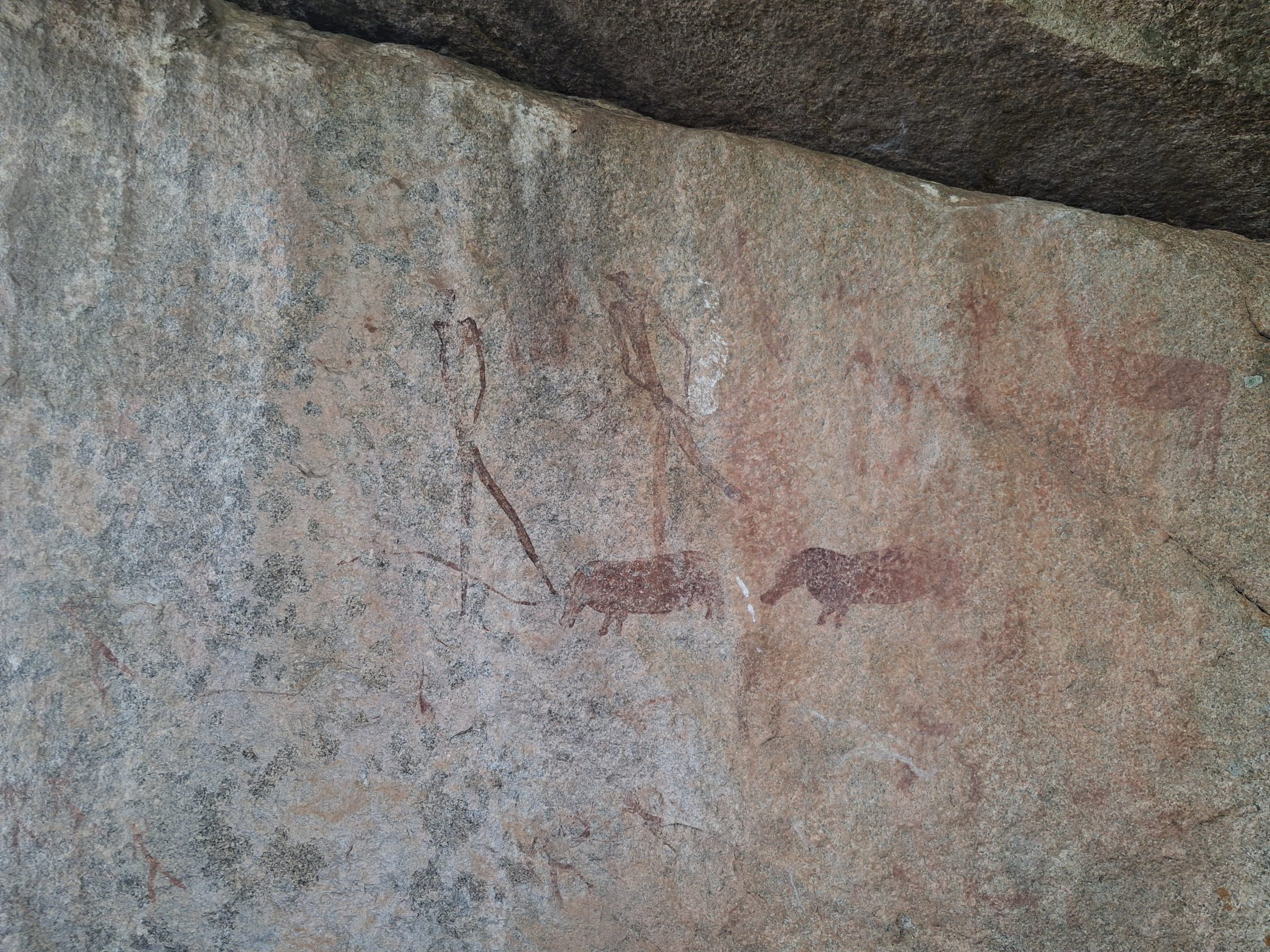
Scattered across the rocky outcrops within Haka Game Park are ochre figures and symbols painted by the San people, the original inhabitants of this landscape. These are not mere decorations. They are historical documents, rendered in pigments that have survived centuries of wind and rain.
The paintings offer glimpses into a way of life intricately tied to this environment. Depictions of wildlife, the eland, kudu, and giraffe—reveal not only what animals roamed here but also their spiritual and practical significance to the hunter-gatherers who shared this space. Ritual scenes suggest complex belief systems. Human figures engaged in dance and ceremony speak to community life that unfolded on this very ground.
For the San, the boundary between the natural and supernatural was porous. Animals were not just food sources but spiritual beings. The landscape itself held memory. By leaving their marks on these rocks, they consecrated the place, making it part of their ongoing story.
Today, Haka Game Park stands as the custodian of this fragile archive. Unlike museum artifacts displayed behind glass, these paintings remain in their original context, exposed to the same elements, surrounded by the same wildlife, connected to the same hills that have watched over them for millennia. Protecting them requires not just security but an understanding that their meaning is inseparable from the living landscape that contains them.
The Land as Archive: Masasa, Chishawasha, and Goromonzi
Location is never accidental. The San chose this place for reasons that remain visible to anyone who spends time here.
The Chishawasha Hills form a natural amphitheatre, providing shelter and strategic vantage points. Their caves and overhangs offered refuge. Their heights allowed observation of game movements across the valley below. For countless generations, these hills have been more than scenery, they have been home.
Goromonzi, the broader district, carries its own weight of history. The name itself evokes a landscape dotted with granite kopjes that served as natural fortresses, ceremonial sites, and landmarks guiding travellers long before maps existed.
And Masasa, the specific locality of the park, is a geographical marker passed down through generations. Names like these are themselves heritage. They anchor communities to place, encoding memory in language.
The wetland at the heart of Haka Game Park ties all of this together. For ancient inhabitants, this was not merely “biodiversity.” It was survival. The water attracted game, making hunting predictable. It supported the plants used for food, medicine, and craft. It transformed a harsh environment into a place where human life could flourish.
When we protect this wetland today, we are doing more than conserving an ecosystem. We are maintaining the very conditions that made human settlement possible here for thousands of years.


Bridging Heritage and Conservation: A Delicate Balance
The relationship between cultural heritage and conservation is rarely straightforward. The same beliefs that endanger the pangolin also connect communities to the land. The same hills that hold ancient art also attract modern development. The challenge facing Haka Game Park is to honour heritage while protecting nature and to help communities see these goals as complementary rather than conflicting.
Education is the bridge.
By engaging schools in programs that explore both the rock paintings and the living ecosystem, the park demonstrates that culture and nature are not separate. The San artists painted animals because animals mattered to their survival and spirituality. Protecting those animals today honours that legacy.
By involving local communities in pangolin conservation, the park addresses the myths that drive trafficking while respecting the cultural frameworks that give the animal meaning. Awareness campaigns explain why the pangolin is special without endorsing the beliefs that fuel poaching .
By preserving the wetland, the park maintains the landscape that has sustained human life here for millennia, from hunter-gatherers to farmers to modern visitors seeking peace.
Conclusion: A Richer Definition of Conservation
Haka Game Park challenges us to expand our understanding of what a game park can be. It is undeniably a place for wildlife, for zebras grazing, birds migrating, and the elusive pangolin hiding in its burrow. But it is also a place for memory. For the ochre handprints left on rock by artists who lived here before any recorded history. For the hills that have watched over countless generations. For a name that carries the weight of cultural tradition.
When you visit, you will see the animals. You will breathe the air. You will feel the peace of the wetland.
But if you look more closely, you will also sense the presence of those who came before and understand that protecting this place means protecting not just nature, but the entire human story embedded in this landscape.
That is the deeper mission of Haka Game Park. A sanctuary for wildlife. A guardian of heritage. A living cultural conservation centre, hidden in plain sight at Harare’s doorstep.
